

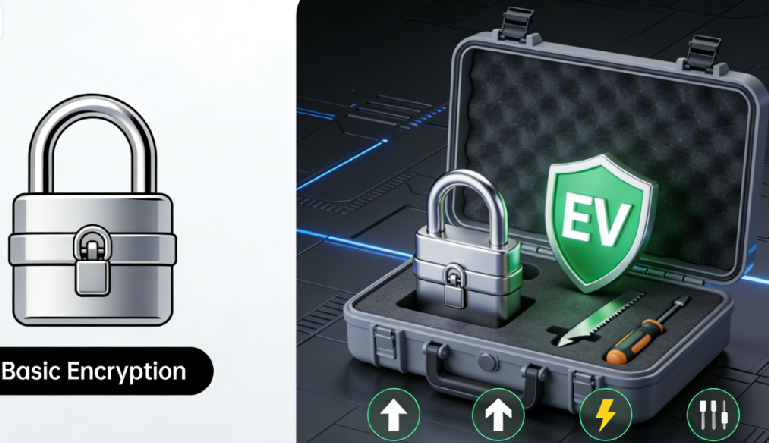
It was 2:17 AM when the operations dashboard lit up with a perplexing anomaly. The server's vital signs were all green—CPU, memory, network throughput—yet the conversion rate for mobile users had plummeted by 47% compared to desktop. After three hours of frantic investigation, the culprit wasn't a bug in the payment gateway or a database deadlock. The issue traced back to a single, overlooked configuration: the missing OCSP Stapling flag in their SSL/TLS setup. On unstable mobile networks, the additional round-trip required to validate their certificate's revocation status was adding just enough latency to make impatient users abandon their carts.
This incident reveals an uncomfortable truth most server administrators haven't fully grasped: in the modern web ecosystem, SSL/TLS has evolved far beyond its basic encryption role. It has become a multifunctional strategic asset that directly shapes user trust, search engine visibility, and core performance metrics. That humble padlock in the address bar is now the key to unlocking capabilities most businesses leave untapped.
The Trust Revolution: From Anonymous Padlock to Verified Identity
The journey began with a simple padlock—a universal symbol for a secure connection. But as phishing attacks grew more sophisticated, a padlock alone became insufficient. Enter the era of certificate validation tiers, a hierarchy that transforms how trust is communicated.
Domain Validation (DV) certificates, the most common type, only verify that you control the domain. They give you the padlock, nothing more. Organization Validation (OV) and Extended Validation (EV) certificates require rigorous, manual checks of your business's legal and physical existence by the Certificate Authority. The reward? Your verified legal company name appears in the browser's address bar (most prominently with EV), inside the certificate details panel.
The impact is psychological and measurable. Studies of financial service websites show that pages secured with EV certificates exhibit a 15-20% lower abandonment rate on sensitive forms compared to those with DV certificates. It's not that EV is technically more secure for data in transit; it's that it makes security visible and legitimate, reducing user anxiety at the critical moment of decision. It turns an infrastructure cost into a conversion rate optimizer.
The SEO Engine You Didn't Know You Had: HTTPS as a Ranking Signal
In 2014, Google made a quiet announcement that reshaped the web: HTTPS would become a ranking signal. This wasn't a minor tweak; it was a fundamental directive to move the entire ecosystem toward a more secure baseline. Today, HTTPS is the default for any site that takes its search presence seriously.
The logic is elegantly circular. Google's core mission is to direct users to helpful, reliable sites. A site that invests in proper security infrastructure is statistically more likely to be a serious, well-maintained operation. Furthermore, secure connections protect the integrity of the data Google's crawlers receive and enable the use of modern, performant web technologies.
The less-discussed consequence is referrer asset security. If your site is served over HTTP, other HTTPS sites may trigger "mixed content" warnings when linking to you, or their security-conscious webmasters might avoid linking to you altogether. This slowly erodes your backlink profile—a core SEO asset. Deploying a properly configured SSL certificate isn't just about your site's security; it's about ensuring your site is a viable, linkable citizen in the modern, secure web.
Performance Unleashed: How Modern TLS is Faster Than Plain HTTP
Here’s the most counterintuitive breakthrough: a properly configured, modern TLS connection can be faster than an old-fashioned, unencrypted HTTP connection. This shatters the long-held belief that security inherently means slowdown.
The hero of this story is TLS 1.3. Compared to its predecessor TLS 1.2, it slashes the security handshake from two round trips to one, and in cases of returning visitors, can even achieve "0-RTT" session resumption. Benchmarks show that enabling TLS 1.3 can improve a site's Time to First Byte (TTFB) by up to 30%. The encryption overhead, once a concern, is now negligible on modern hardware.
But the performance story goes deeper than the protocol version:
OCSP Stapling: As our opening story highlighted, this allows the server to provide a "freshness proof" for its certificate during the handshake, eliminating a separate, blocking HTTP request the browser would have to make. This is a critical optimization for users on high-latency networks.
The HTTP/2 and HTTP/3 Gatekeeper: These modern, high-efficiency application-layer protocols require an encrypted connection. Without HTTPS, you're locked out of their multiplexing, header compression, and improved transport capabilities. Your SSL certificate is literally the key that unlocks these performance enhancements.
Strategic Certificate Management: Wildcards, SANs, and Automation
As infrastructure grows, managing a pile of single-domain certificates becomes an operational nightmare. This is where advanced certificate types transform from a convenience to a strategic necessity for scalability.
Wildcard Certificates (
*.yourdomain.com) are perfect for dynamic environments with numerous subdomains (likeblog.,shop.,api.,dev.). They provide immense flexibility, though it's crucial to remember that compromising the private key exposes all those subdomains.Multi-Domain Certificates (SAN Certificates) allow you to secure a list of completely different domain names (
yourdomain.com,yourotherdomain.net,yourproject.org) with a single certificate. This simplifies management for brands with multiple web properties.
The choice between them isn't just technical; it's architectural. A wildcard supports an agile, pattern-based expansion. A SAN certificate solidifies a known, finite set of assets. Both represent a move from reactive certificate administration to proactive, scalable trust management.
The Real Risk Isn't Breaking the Encryption
The dramatic narrative around SSL focuses on sophisticated attacks breaking encryption. In reality, the far more common and damaging threats are operational failures.
Certificate Transparency Logs: Browsers now expect to see newly issued certificates published in public CT logs. If your CA doesn't do this automatically (or if an internal CA isn't configured correctly), browsers may reject your perfectly valid certificate, causing an instant outage.
Misconfiguration & Weak Ciphers: Supporting outdated, broken cryptographic suites (like TLS 1.0 or certain weak ciphers) creates vulnerabilities. Regular audits with tools like SSL Labs' scanner are non-negotiable.
The Silent Killer: Expiration: An expired certificate doesn't just show a warning; it can completely block access to your site. In an automated world, forgetting to renew a certificate is a shockingly frequent cause of major incidents. Integrating certificate lifecycle management into your core monitoring and alerting system is a mark of professional maturity.
Your Action Plan: Building a Mature TLS Posture
Moving beyond the basic padlock requires intention. Here’s a practical roadmap:
Audit & Inventory: List every domain and subdomain you own. Categorize them: public-facing high-trust (checkout, login), internal, API endpoints. This defines your scope.
Upgrade Your Certificates: For your primary commercial domain, seriously consider an OV or EV certificate. The trust signal is worth the investment. For subdomains and other properties, implement wildcard or SAN certificates to reduce management overhead.
Harden Your Server Configuration:
Enforce TLS 1.3 and disable older, insecure protocols (SSLv3, TLS 1.0, 1.1).
Configure a strong, modern cipher suite that prioritizes forward secrecy.
Enable OCSP Stapling.
Deploy HTTP Strict Transport Security (HSTS) headers to force browsers to always use HTTPS, and consider preloading for maximum protection.
Automate and Monitor: Use tools like Certbot (for Let's Encrypt) or your CA's automation API to handle renewals. Set up proactive monitoring for expiration dates (alert at 30, 14, and 7 days out). Schedule quarterly configuration audits.
We've reached an inflection point where SSL/TLS is no longer just a tax paid for the privilege of encryption. It is the foundational layer of digital trust and performance. The padlock was phase one. Phase two is leveraging this infrastructure to communicate your legitimacy, to cooperate seamlessly with the systems that drive your visibility (like search engines), and to deliver an experience that feels instantaneously secure.
That small icon in the browser is no longer passive. When strategically deployed, it works tirelessly for you—it reassures the hesitant customer, it whispers a commendation to the search crawler, and it clears the technological path for your pages to load at their fastest possible speed. In a digital economy built on trust, your SSL strategy is one of the most direct investments you can make in your own credibility. Move beyond the padlock, and start unlocking what's truly possible.
