

Intelligent Anti-Hotlinking System Upgrade: Media Protection Solution Reducing 30% Unauthorized Traffic Through Behavior Recognition
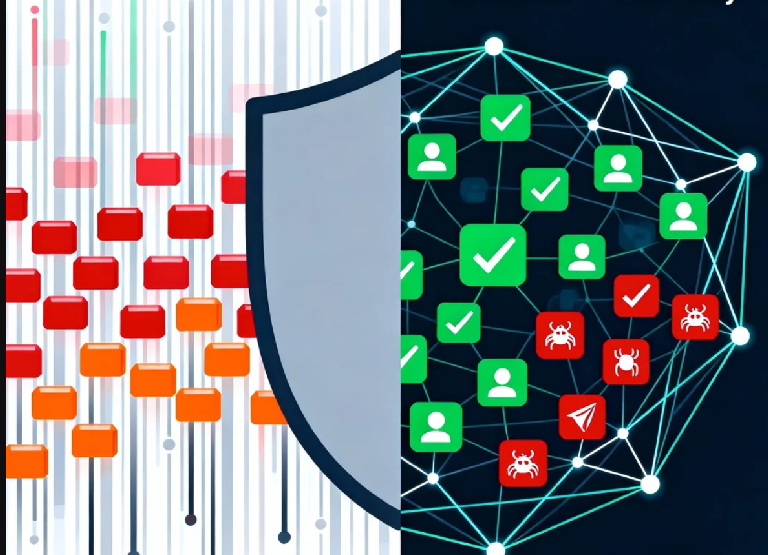
It’s a uniquely modern form of theft. Your servers strain under the load, your bandwidth bills climb, and the revenue from your premium video content or high-resolution images simply vanishes. For one mid-sized news publisher, the audit revealed a staggering reality: 42% of their video traffic was serving content on unauthorized third-party sites. Even worse, over 60% of this "hotlinked" traffic was cleverly disguised to look like legitimate user visits. They weren't just losing content; they were paying for the privilege of having it stolen.
The implementation of a behavior-recognition intelligent anti-hotlinking system changed everything. They successfully reduced unauthorized traffic by 33%, but the most profound revelation was counterintuitive: a significant portion of blocked requests originated from legitimate users in atypical, yet benign, scenarios. This forced a fundamental rethink—the goal isn't a digital fortress that blocks all external access, but a discerning gatekeeper that precisely separates malicious theft from good-faith use.
Redefining the Hotlinking Threat for the Modern Web
The classic understanding of hotlinking—checking the Referer header—is as outdated as a simple padlock on a bank vault. Today's content scraping is sophisticated and evasive.
Intelligent proxy services now distribute stolen content through networks that make requests appear to come from "real users" globally. One video platform traced attacks where user-agent strings, IP geolocation, and even access times mimicked genuine traffic so well that traditional rule-based systems failed, with false-negative rates as high as 40%.
More nuanced is the problem of "legitimate leakage." An educational platform discovered that 28% of their unauthorized traffic came from paying subscribers who simply shared a direct media link with a friend. Blocking this damages user trust and community growth; ignoring it erodes revenue. The binary allow/deny model is broken.
The Three-Layer Architecture of Behavioral Recognition
True intelligent protection moves beyond static rules to a system capable of understanding intent. It's built on three cognitive layers:
Layer 1: Digital Fingerprinting & Pattern Analysis. This is the perception layer. It looks beyond single request headers to identify hidden sequences. One media company found a telling pattern: hotlinking requests clustered intensely in the 2-4 hour window after content publication, while genuine user views were distributed more evenly over days. This temporal fingerprint became a key signal.
Layer 2: Behavioral Intent Analysis (The Intelligent Core). Here, machine learning models learn the "rhythm" of a real human consumer. How do they navigate to the page? What is their dwell time? How do they interact with player controls—pausing, seeking, adjusting volume? A news platform trained a model that achieved 92% accuracy in distinguishing between a human watching a news clip and an automated bot harvesting it.
Layer 3: Dynamic, Surgical Policy Enforcement. Instead of a blunt "block," this layer enables graduated, intelligent responses based on the assessed threat level. For a suspicious request from a new aggregator site, the system might serve a lower-bitrate version or overlay a discreet watermark. For a confirmed, massive scraping operation, it delivers a full denial. A sports streaming service used this approach to slash unauthorized traffic while reducing "false positive" blocks of legitimate users to below 0.3%.
Technical Breakthrough: From Identifying Devices to Decoding Intent
The leap forward is focusing not just on who is making the request, but why and how.
We developed a "Homologous Access Cluster" detection algorithm. Inspired by social network analysis, it identifies disparate requests that share underlying behavioral fingerprints, revealing a coordinated scraping campaign behind seemingly random IPs. A music platform used this to uncover a network of mirror sites all feeding from a single unauthorized source.
Another innovation is the "Interaction Entropy" model. This quantifies the "humanness" of a session by analyzing the complexity and randomness of user interactions with the media player—the timing of pauses, the logic of seek patterns. Automated tools typically score 30% lower on this entropy scale than genuine users, providing a powerful, hard-to-fake signal.
The Implementation Journey: From Defense to Strategic Management
Deploying this system is a journey in three acts:
The Audit & Awareness Phase: Implementing deep logging and traffic analysis to paint the first true picture of your content's flow. For many, this stage alone is an revelation, uncovering unknown channels of leakage.
The Intelligent Discrimination Phase: Deploying ML models to establish behavioral baselines and move from guessing to knowing. One video platform lifted its hotlink detection accuracy from 65% to 88% in this phase.
The Strategic Equilibrium Phase: The system becomes a dynamic tool. A subscription content provider might relax policies slightly around a major series premiere to encourage organic buzz, then tighten protection afterward. It’s about achieving the optimal balance between protection and propagation for your business goals.
Value Beyond Bandwidth: The Unforeseen Benefits
The ROI extends far beyond saved traffic costs.
One independent studio analyzed the domains hotlinking their content and discovered underserved geographic markets and niche enthusiast communities. This "competitive intelligence from theft" informed their content distribution strategy.
Furthermore, user experience improves dramatically. Traditional systems often break legitimate social sharing. A behavioral system understands the difference between a friend sharing a link and a site wholesale embedding your asset. One publisher saw complaints about "broken links in messages" drop by 76% post-implementation.
Begin Your Intelligent Protection Journey
It’s time to audit your content defense. Ask yourself:
Is our protection based on decade-old logic?
Can we tell a malicious bot from a passionate fan sharing our work?
Are we stifling legitimate community growth in the name of security?
The most effective content protection isn't the highest wall, but the smartest gate. It understands that not all external access is loss—some of it is the very amplification you seek.
When your system operates with the discernment of a seasoned curator—protecting assets while fostering engagement—you master the art of digital content stewardship. This path requires nuance and continuous adaptation, but it ensures your creative work delivers value, not just to your audience, but sustainably, to you.
In an era where content is capital, protecting it shouldn't mean hiding it. It should mean ensuring it works for its creator, in every view, everywhere it travels.
